

If you live in the Midwest, you already know winter doesn’t play around. Heavy snow, deep freezes, and wild temperature swings make ice dams one of the most common cold-weather roofing problems we deal with at GPI Inc..
They might start as “just some ice on the edge of the roof,” but ice dams are usually a warning sign that something bigger is going on inside your attic. The good news? When you fix the root causes, ice dams are very preventable.
Here’s your Midwest-focused Ice Dams 101 guide — what they are, why they happen, what they can damage, and how to stop them long term.
What are Ice Dams?
(And why your gutters usually aren’t to blame)
An ice dam is a ridge of ice that forms along the lower edge of your roof, near the eaves. Here’s what’s happening:
- Snow sits on your roof after a storm
- Heat escaping from the house warms parts of the roof
- Snow melts and runs downward
- Water hits the colder roof edge and refreezes
- Ice builds up into a “dam” that blocks more meltwater
It’s easy to blame gutters because that’s where you see the ice. But in most Midwest homes, gutters are not the root cause. They may hold ice and make it more visible, but the real issue usually starts in the attic.
If heat is leaking into the attic, it warms the roof deck and triggers the melt-and-refreeze cycle that creates ice dams.
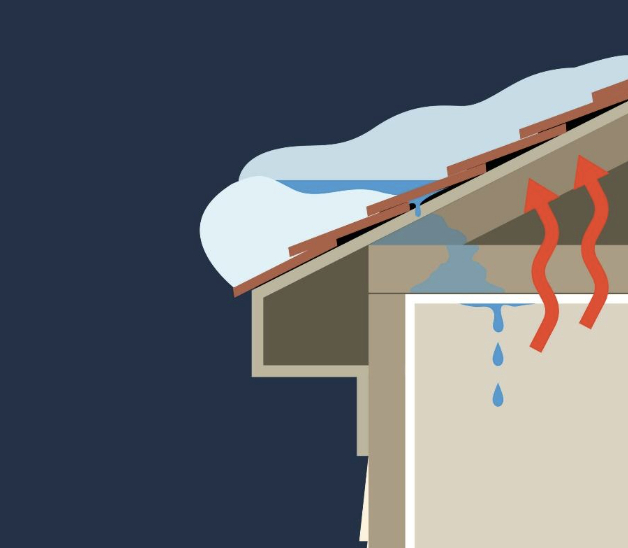
Bottom line: Ice dams are a heat and airflow problem — not just a gutter problem.
The Three Conditions That Create Ice Dams
Ice dams typically form when these three things happen at the same time:
1️⃣ Snow on the Roof
Midwest winters give us plenty of this. Snow acts like a water source once melting begins.
2️⃣ A Warm Roof Surface
When indoor heat escapes into the attic, it warms sections of the roof deck. Snow melts from underneath — even when outdoor temps are below freezing.
3️⃣ A Cold Roof Edge
The eaves extend beyond the heated walls of the house, so they stay colder. Meltwater refreezes here and starts building the dam.
Simple way to picture it:
Your roof is warm in the middle and cold at the edges. That temperature difference is exactly what we work to eliminate.
The goal of prevention is to keep the entire roof deck uniformly cold in winter.
Damage Ice Dams Can Cause
Ice dams aren’t just a cosmetic winter issue. When water can’t drain off normally, it backs up under shingles and into your roof system.
Here’s what we often find when Midwest ice dams go unchecked:
🏚 Shingle Damage & Early Roof Wear
Water backing up under shingles breaks down underlayment, loosens fasteners, and speeds up aging — especially with repeated freeze/thaw cycles.
🪵 Fascia & Soffit Rot
Ice and trapped moisture along the roof edge can rot wood trim, cause peeling paint, and eventually require replacement.
🎨 Interior Ceiling Stains & Drywall Damage
That mysterious brown spot on a ceiling in January? Very often ice dam backup — not plumbing.
🌫 Mold & Wet Insulation
Wet insulation loses effectiveness fast, which makes the attic warmer… which makes the ice dam worse. Add moisture + wood = mold risk.
🧲 Gutter Stress & Pull-Away
While gutters aren’t the cause, heavy ice can bend hangers and pull sections loose, leading to drainage issues later.
If you’re seeing thick ice at the eaves, large icicles, or recurring winter leaks, it’s worth addressing sooner rather than later.
Real Prevention: Fix the System, Not Just the Symptoms
At GPI Inc., we approach ice dam prevention as a whole-roof system issue. Ice dams are usually a symptom of how the attic and roof are performing together.
🔒 1. Attic Air Sealing (Stop Heat Leaks First)
This is the biggest factor. Warm air escaping into the attic drives roof warming.
Common leak points we address:
- Plumbing vent pipes
- Electrical boxes and wiring penetrations
- Recessed lights
- Attic hatches and pull-down stairs
- Open framing cavities (top plates and chases)
Less heat in the attic = less melting on the roof.
🧣 2. Balanced Insulation (Keep Heat in the House)
After sealing, insulation can actually do its job.
We look for:
- Thin or missing insulation near exterior walls
- Compressed insulation
- Gaps over eaves where access is tight
The goal is even, consistent coverage across the attic floor.
🌬 3. Proper Ventilation (Keep the Roof Cold & Dry)
Ventilation isn’t just “add more vents.” It’s balanced airflow.
A healthy system includes:
- Soffit intake vents (low) bringing in cold, dry air
- Ridge or roof exhaust vents (high) letting warmer air escape
- Baffles/rafter vents to keep insulation from blocking airflow at the eaves
This helps keep the roof deck temperature consistent across the entire surface.
🛠 4. Roof Edge Protection (Backup Defense)
Even with a well-performing attic, edge details matter in the Midwest.
We often recommend:
- Properly installed drip edge to protect the roof deck edge
- Ice & water shield membrane along eaves for added leak protection in ice-dam-prone areas
This doesn’t replace attic improvements — it adds an extra layer of defense.
A Quick Note on “Temporary Fixes”
If you already have an ice dam:
✔ You can carefully remove snow from the roof edge using a roof rake from the ground
❌ Avoid chipping ice with tools — this often damages shingles
⚠ De-icing cables are a short-term aid, not a long-term solution
The permanent fix almost always comes back to air sealing, insulation, and ventilation.
If your home deals with ice every winter, it’s not just “bad luck” — it’s a performance issue we can improve. Fixing it not only protects your roof, but also helps with comfort and energy efficiency all year long.
If you are experiencing issues from ice dams at your home, contact us today!